A closer look at meal preparation
Good food, made at home
Appetite often changes with age, and cooking can become tiring or unsafe. A caregiver who plans and prepares meals can help your loved one eat regularly, enjoy familiar dishes and keep the kitchen safe.
What meal preparation includes
- Planning a weekly menu with your loved one
- Making a shopping list and doing the grocery run
- Cooking fresh meals and preparing portions for later
- Following dietary guidance from a doctor or dietitian, such as low-salt or diabetic-friendly meals
- Encouraging fluids and noticing changes in appetite
- Washing up and keeping the fridge clear of expired food
Cooking together
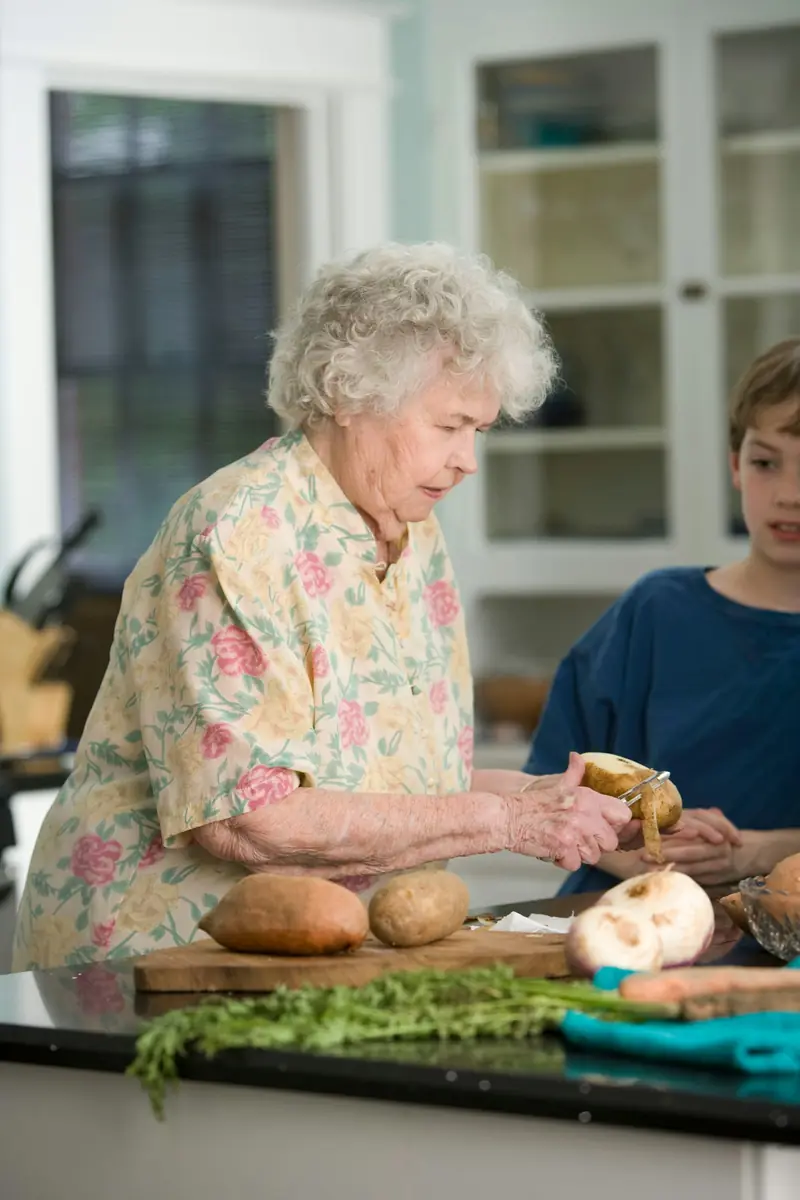
For many people, the kitchen is the heart of the home. Where it is safe, a caregiver can cook alongside your loved one, keeping favorite recipes alive and turning a task into time together.
Tell the caregiver
Share allergies, cultural or religious food preferences, textures your loved one finds easier to eat, and any instructions from their doctor. Caregivers follow dietary guidance but do not create medical nutrition plans.